

†Based on the AREDS and AREDS2 clinical studies
Explore the history of the Age-Related Eye Disease Studies, a series of clinical studies that Bausch + Lomb collaborated with the National Eye Institute to conduct.
The AREDS Story
Age-Related Eye Disease Studies Began
-
1992
Government researchers at the National Eye Institute (NEI) began a study called the Age-Related Eye Disease Study to see if certain nutrients could reduce the risk of AMD progression.
-
1995
Bausch + Lomb started collaborating with the NEI in the AREDS studies.
-
2001
NEI researchers concluded the first 5-year period of the study
19%
reduced risk of moderate vision loss after five years25%
reduction in risk of AMD progression in those with moderate-to-advanced AMD -
2013
Based on new learnings around AMD, the NEI researchers decided to do more research to improve the original AREDS formula.
18%
reduced risk of progressing to advanced AMD, compared to patients taking the original AREDS formulation. -
2021
NEI confirmed the formula’s persistent benefits based on the 10-year AREDS2 follow-on study. During the last 5 years of the study, participants took PreserVision which was donated by Bausch + Lomb.
-
2026
The NEI continues to recommend the AREDS2 nutrients for helping reduce the risk of progression in moderate-to-advanced AMD.
-
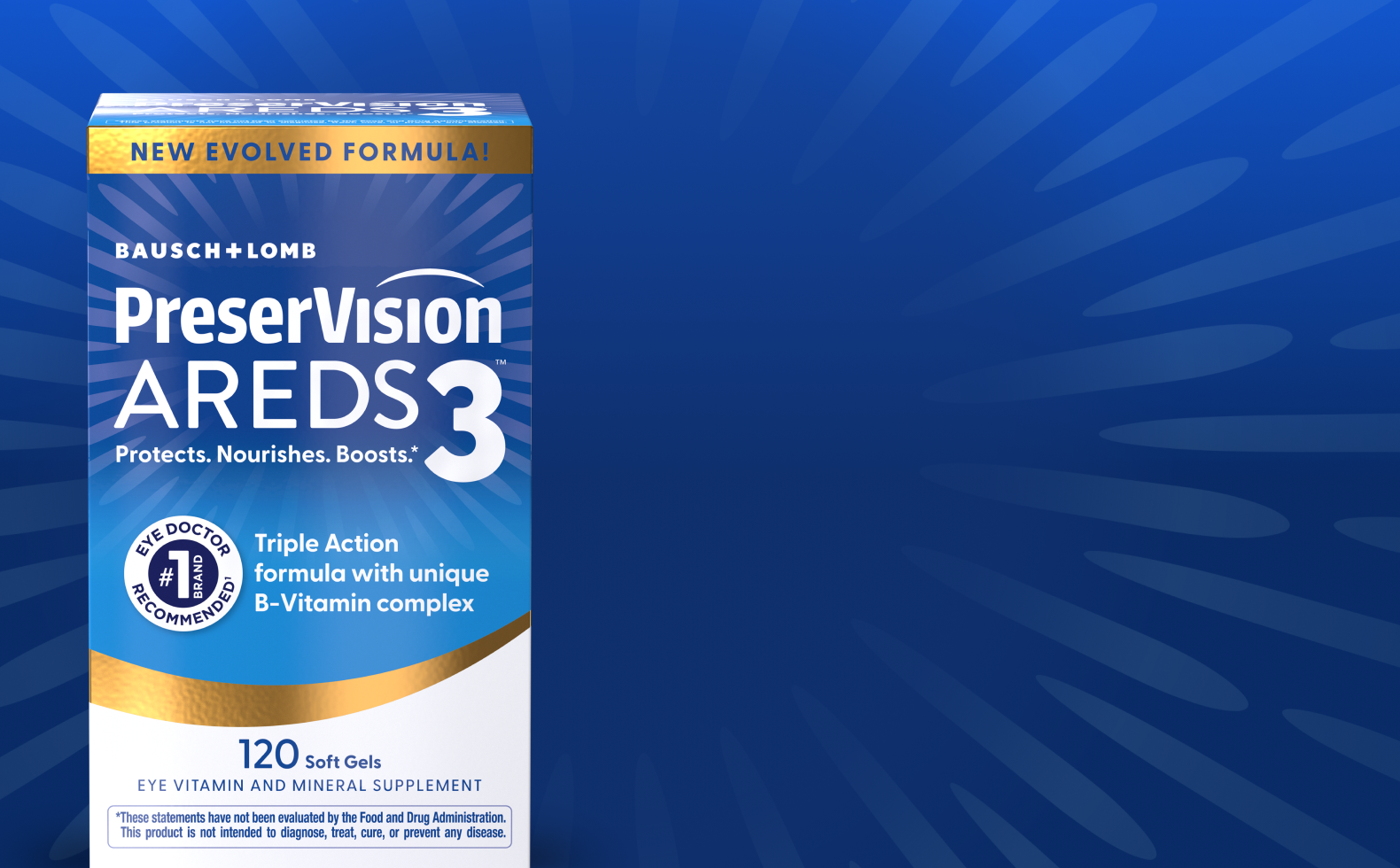
The Most Advanced PreserVision Formula Yet Launched: PreserVision AREDS3